
Screwtape, Scapegoating, Sexuality
Why is "Christian ethics" just about gay people now?

Human beings are so made that the ones who do the crushing feel nothing; it is the person crushed who feels what is happening. Unless one has placed oneself on the side of the oppressed, to feel with them, one cannot understand.
—Simone Weil, Lectures on Philosophy
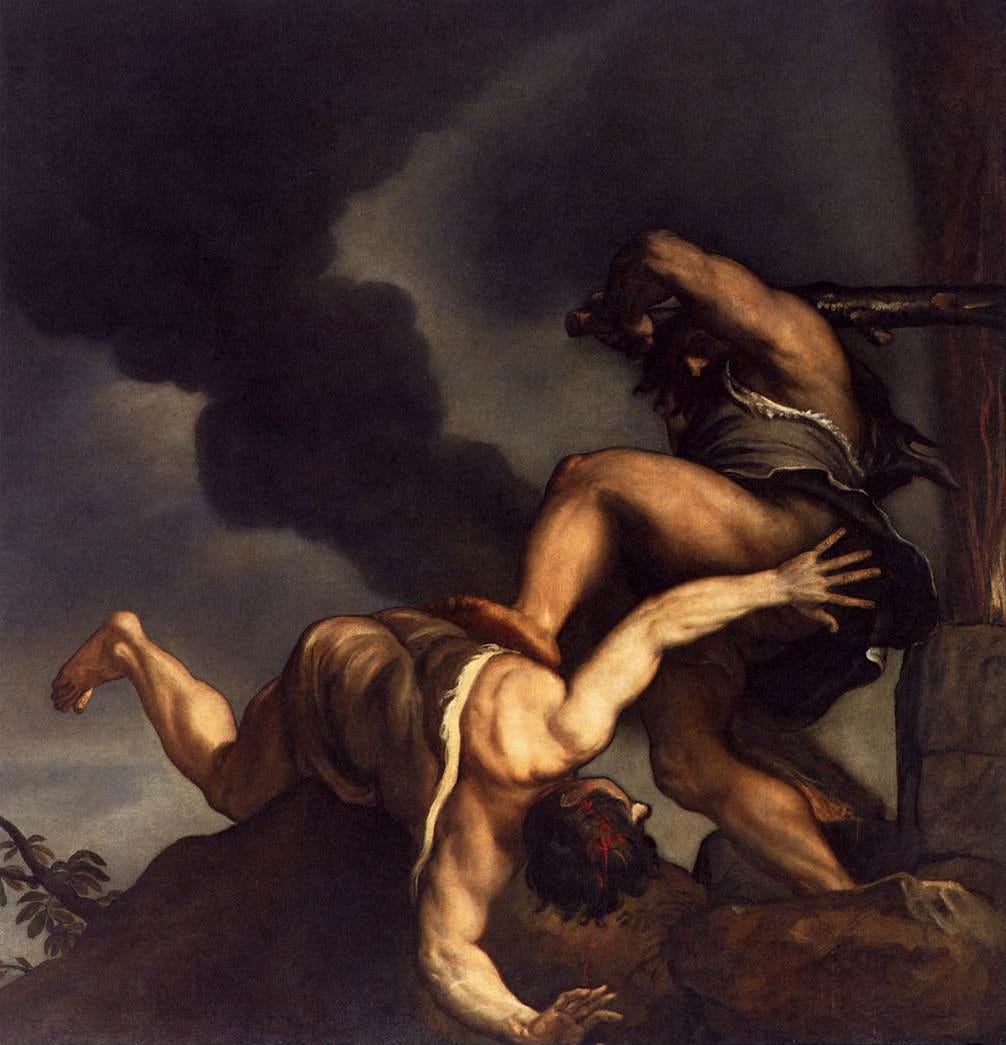
My dearest Wormwood,
I am sure you will agree that punishment for shoddy work is necessary, but hardly pleasant. I enjoyed turning in your reports of ineptitude no more than you, I assure you; but as you know, failure cannot not go unnoticed by Our Father Below. All things considered, your five decades of imprisonment and torture was a rather modest sentence. I have recommended that you be given a probationary case to prove your worth in the fight against the Enemy. If you are granted this opportunity, I am certain you understand that a second failure will not be so lightly addressed.
However, you are in luck! While you were away, the humans, in their never-ending quest for technological mastery, have invented weapons which even our top devils would not have dreamed of. In all my years, I have not before witnessed an age so replete with tools for our use. Soon you will be introduced to the wonders of what they call the Internet, which gives them access to an endless wellspring of whatever they can bring themselves to ponder. You will come to love words like Instagram and YouTube and Twitter; when used properly, they represent our salvation. There is very little the Enemy can do when one of our patients is in the death-grip of a “doomscroll”.
These tools are best used for distraction. You may recall my case of the staunch atheist who loved to read at the British Museum: I saved him from the clutches of the Enemy by distracting him with the thought of lunch. Now the thought of food is but a far cry from what we can marshal with the present weaponry.
As you know, the strategy department periodically releases directives on how we should approach battle with the Church. We see that horrible thing in all its poisonous luminosity; it has taken centuries for our smartest minds to understand how she works. The current directive is simple: scapegoating. We choose a particular group of people—it does not matter in the slightest who we choose, in truth—to make the scapegoat of the so-called Christians, and watch as they tear themselves apart. It well and truly does not matter who we scapegoat: homeless drug addicts, queer people, immigrants, Jews, Muslims, no matter. Whoever we choose, those who are not members of the scapegoat will throw themselves into a fervor, believing that they have found the source of all evil in their lives. They, believing that they have the power of the Enemy on their side, will resort to all their basest instincts when engaging with those in the scapegoated group. Petty slander, slurs, empty death threats: all we have to do is nudge our patients in the right direction. Few evils are more delicious than those committed under the influence of a misguided taste for “justice”.
If your new case happens to be a member of the church—as understood by the humans, not as we see it—then you need do little more than convince him that any old issue, say gay marriage, represents our Father’s own hand reaching into his country, and watch as the fireworks begin. Few thoughts are more useful to us than “at least I’m not as bad as him!“ It accomplishes two goals in one stroke: we distract the patient from focusing on the Enemy, and we give our patient an outlet for all his evil desires which the Enemy works so hard to transform. All the better that we use the Enemy’s own words against Him; we can tell our patients that what they are doing is “important” and “theologically necessary”. Direct your patient’s focus away from the things of the Enemy: serving the poor, listening to the bereft, caring for the outcast. Let your patient take some particular issue, especially one which the Enemy wants to be peripheral at best, and make it so large that your patient blocks out his view of the Enemy with our petty squabble.
If your patient happens to be a member of a group which the church deems irredeemable, all the better! It will be the easiest thing in the world for you to convince your patient that the Enemy is not real—or, if He is real, that He despises your patient. After all, your patient will have experienced (or think they have experienced) the “love” of the Enemy firsthand; nothing is quite so painful for a member of the oppressed than the “love” of the oppressors. You might think it dangerous to create oppressors and oppressed, given one of their sages once cried to the Enemy over the tears of the oppressed, but a propaganda piece from many years ago has convinced them that “Ecclesiastes” is far too depressing to actually read. The Enemy does love your patient—a statement which we still have not managed to understand, what He sees in humans I do not know—but you cannot let them discover this. All you need to do is keep them focused on the dastardly mess which we have created under the name of “the church” and your patient will hardly suspect that there is a difference between “the church” and The Church.
This is what makes scapegoating so masterful when it is successful. We hardly have to do anything at all; the humans will practically do our work for us! A whisper here, a suggestion there, the thought of “At least I’m better than…” and they do the rest. The oppressors will rip themselves to shreds trying to outdo one another in vice like anger and malice; the oppressed, believing that this is the work of the Enemy, will turn away from Him. One of our good friends, Glubose, has convinced the leader of a powerful denomination that he should campaign for the reversal of gay marriage—to save the children! Glubose whispers in his ear, “think of the children,” all the while distracting him from the rampant abuse scandals which plague his own denomination.1 I must congratulate Glubose when I next see him, it is truly a masterful stroke. As long as Glubose keeps him away from those dastardly words of the Enemy during his stint as a human—something about a log in one’s own eye, I don’t recall—he shall go down in history as chief among Our Father’s soldiers.
You know, there was a time when our scapegoating tactic simply did not work very well. Back in the early days, when the Enemy had just finished his stint as a human and even we did not know if he was coming back in five minutes, those who identified as Christians were themselves the oppressed. How they remained in the clutches of the Enemy despite our best attempts remains something of a mystery to us: we threw prison, torture, martyrdom at them, all to no avail. One of my Roman patients once attempted to insult the Christians by saying that “Christianity is a religion of women and poor people.”2 And yet that is precisely what the Enemy wants! He is far more at home spending time with the oppressed, those people on the margins who we have such little interest in, than he is with those in power. Truly I do not understand what He sees in them. But during that time, His followers were great and terrible in might; they refused to see anyone as worse than themselves, and spent every last drop of effort attempting to help the poor and the sick. It was dark days, then: Our Father Below had just suffered his most terrible wound, as you know, and we did not know what would happen.
I am sure you will forgive your old uncle for reminiscing about bygone days; it is a habit I try not to engage in too frequently. I hope these notes will be of use to you as you attempt to prove yourself once more.
Affectionately yours,
Uncle Screwtape
The fight against evil easily acquires an evil character itself; it becomes infected by evil. […] The good become evil for the sake of victory over evil and do not believe in the use of other methods than evil in the conflict against evil. […] It is necessary to be within the good and to radiate the good. It is only the Gospel which overcomes this rebirth of the conflict with evil in the form of a new evil, and regards the condemnation of sinners as a new sin.
—Nikolai Berdyaev, The Divine and The Human
There is an understanding of Christianity, rampant in today’s church, which renders “Do you believe in gay marriage?” the most pressing possible question you can ask your fellow man. Not “Do you believe that Christ is Lord?” or “Have you been baptized in the name of the Father, Son, and Holy Spirit?” but “Do you believe in gay marriage?” No longer does trinitarianism nor Christ himself draw the line between orthodoxy and heterodoxy, but gay marriage. Is this not rather strange—that a question which could only have possibly been asked by those living after 18503 is now the dividing line between the saved and the damned?
And it is not merely in matters of theology where this question has taken over, but in ethics as well. Many christians seem to be more emotionally invested in making sure gay people do not have sex than they are in any other ethical questions of our day. And I want to know—why? Why is this the question of ethics that the church has decided makes or breaks orthodoxy, makes or breaks whether someone is a “good person”? Are we justified in making not only sexual ethics, but a rather narrow subset of sexual ethics, the primary issue upon which all Christians must take a stand or be condemned as apostate? Or is this preoccupation more likely to be the work of the Enemy than a work of God?
It is clear from any reading of the Bible that the question of gay sex4 is at best a peripheral one. In the New Testament, it is directly addressed at most three times, none of which occur in the Gospels. There is so much more to the ethical life of the earliest Christians than policing one’s sexual proclivities. We can see this through the Sermon on the Mount, which shows us what our lives should consist of. It looks like mourning with those who mourn; being merciful peacemakers; letting go of anger; loving those who hate you; giving to the poor; avoiding judgment of others; in sum, treating all as you would be treated. And, yes, he commands us to not commit adultery. That is important—questions of sexual ethics are certainly not unimportant—but it is no less important than anything else on this list. Indeed, many of them are more important, based on how many parables and miracles of Christ are focused on feeding the poor, healing the sick, and sitting with the outcast. If this be the case, why do so many take up a small handful of words, words which do not address LGBTQ people directly, and use them as swords to cut into our flesh? Why have we become the chosen scapegoats of our time? Are we not also made in Christ’s image?
I am not saying, dear reader, that questions of sexual ethics hold no weight. On the contrary, I think the questions of what we do with our bodies, sexual or otherwise, are often neglected. But they are neglected because of this: in so much of our Online Discourse, “Christian ethics” now means “Christian sexual ethics,” and “Christian sexual ethics” means “why gay people can’t have sex.” If you want to talk about sexual ethics, fine! But you better be talking about the ethics of the things you are doing in your own bedroom before you talk about other people’s bedrooms.5 And while you’re at it, I suggest thinking about what value your body has outside of the bedroom—your body is far more than a receptacle for a soul and a sexual pleasure device.
Now, lest I give the impression that I am somehow the perfect Christian handing down these thoughts from on high, I should express my own responsibility here.6 There is an equally terrible danger that I can and do fall into: repeating and recreating the same oppressive structures which hurt queer people. It is far too easy, far too tempting, to become evil for the sake of victory over evil. Kierkegaard challenges each of us to read the Bible as though it is speaking solely to ourselves. Presenting Christ’s call in a way that challenges only others and not myself would be the gravest of misunderstandings. I am guilty of the thought “at least I’m better than…,” which makes me complicit in all of this. Let him who is without sin cast the first brick.
Crying out for salvation from injustice is demanded by the Imago Dei, but it does not give anyone the right to denigrate the Imago Dei in others—including those who hurt us or disagree with us. The real issue here is not gay against straight, black against white, Gentile against Jew, but the very notion of us versus them. The same standard which we would uphold others to we must first uphold ourselves, otherwise all is lost. Did not Christ teach us to treat others as we would wish to be treated? We are commanded to love our enemies whether our love is reciprocated or not. This goes for all of us; what must end is not “homophobia” per se but the cycle of oppression and the scapegoating of others.
Sexual ethics is an important piece of the picture which Christ demands of us in the Sermon on the Mount—but it is far from the only piece. Nor are many questions of sexual ethics directly resolved by the biblical text: gay marriage, modern divorce law, even masturbation are all understood now in vastly different ways than they were by the cultures which produced the Bible. This creates uncertainty which we must honestly grapple with, as Jacob grappled with God; we should give one another grace and understanding when there are disagreements, not ire and hatred.
I have been subjected to this misplaced energy directed towards casting all gay people as sexual deviants who desire the end of “Western Society” or other nebulous bullshit catchphrases.7 But on the whole, I have had it rather mildly compared to many of my friends. I have watched, and am watching, people in my life get kicked out of their own families after coming out. Many of my friends worry about disownment and hide their experiences because christian culture has decided that christian ethics means “gay people bad.” I helplessly stood as a spectator while friends underwent long periods of anxiety, depression, even suicidal ideation: all because they have internalized the notion that being queer makes you Lucifer’s own right-hand man. It would be bad enough to see and experience this, whatever the cause—but this is happening because God’s own people are using God’s own word to maim and martyr our fellow image-bearers.
The question I keep asking at the end of the day is the following: is christian ethics truly best summed up in telling a specific, marginalized group of people what they aren’t allowed to do? Or is that a radical misunderstanding of the expectation Christ placed on his followers?
The true hero, the true subject, the center of the Iliad is force. Force employed by man, force that enslaves man, force before which man’s flesh shrinks away. In this work, at all times, the human spirit is shown as modified by its relations with force, as swept away, blinded, by the very force it imagined it could handle, as deformed by the weight of the force it submits to. For those dreamers who considered that force, thanks to progress, would soon be a thing of the past, the Iliad could appear as an historical document; for others, whose powers of recognition are more acute and who perceive force, today as yesterday, at the very center of human history, the Iliad is the purest and the loveliest of mirrors.
—Simone Weil, The Iliad, or The Poem of Force
If you made it this far, please consider becoming a paid supporter of my work. While none of my articles will ever be paywalled, your support will help me continue justifying my writing as a regular part of my life as I begin a PhD program in August. I am also working on some additional benefits for paid subscribers, including potential zoom meetings and other assorted things like handwritten notes. Regardless of whether you choose to support my work monetarily or not, thank you for reading!
Everyone say hello to Albert Mohler!
A paraphrase on Celsus, which comes to us through Origen’s Contra Celsum 3.44: “…if there be any ignorant, or unintelligent, or uninstructed, or foolish persons, let them come with confidence. By which words, acknowledging that such individuals are worthy of their God, they manifestly show that they desire and are able to gain over only the silly, and the mean, and the stupid, with women and children.”
The question is only possible because we did not have modern concepts of “sexual orientation” until the 19th century, and they only became solidified in our cultural imagination with the work of Freud. “Gay” marriage was not possible to discuss in 1800 because “gay” was not a concept that existed in 1800.
Sidenote: this is why that talking point some liberal commentators will give about “homosexuality was introduced into the Bible in 1943” is, while true, true in the most banal and uninteresting way possible. The word was only introduced then because that’s within a couple generations of the word “homosexuality” existing and meaning anything. The first occurrence I could find of the word in English dates to 1892.
Most people are never given any of the relevant historical facts about Ancient Near-Eastern or Greco-Roman sexuality. That’s a whole series of articles in itself, but allow me to illustrate one particular fact that may surprise many people. The point of this illustrative fact is to display just how far away our culture is with respect to sexuality from the culture of Paul’s day and place.
In the Greco-Roman world which Paul inhabited in the first century, neither Jew nor Greek considered lesbian sex to be sex at all. How do we know? Well, in part we know because there is a passage of the Talmud which says that lesbian sex does not count for the purposes of whether a woman can marry into the priesthood (priests are only allowed to marry virgins):
And even according to the opinion of Rabbi Elazar, who said that an unmarried man who has intercourse with an unmarried woman not for the sake of marriage renders her a zona, a woman who has had sexual relations with a man forbidden to her by the Torah, this applies only to intercourse with a man, but lewd behavior with another woman is mere licentiousness that does not render her a zona, and therefore she is still permitted to marry into the priesthood. (Yevamot 76a:9)
Because of the power dynamics inherent in their schematic for sexuality (penetrator = dominant = masculine = good; penetrated = submissive = feminine = bad), lesbian sex simply did not count as sex. Amongst other things, this substantially complicates any reading of Romans 1 as discussing lesbian sex—Paul would likely not have believed in “lesbian sex” as a concept in any way analogous to our own.
While I have personally stepped out of the arena of publicly engaging sexual ethics debates, some people’s work on here who I have appreciated in the past are Haley Baumeister, Sheila Wray Gregoire, Karen R. Keen, and Matthew R. Guertin. They represent a variety of perspectives with a variety of emphases in their work, and my listing here does not indicate an endorsement, merely an appreciation for the work they have done (even when and especially if I disagree).
Kierkegaard would probably write this under the pseudonym Anti-Climacus, since that is the pseudonym he used when he wanted to separate himself from his understanding of the Christian’s responsibilities in the world. I have no such recourse, but nonetheless I agree with him in spirit.
This sentiment has been expressed to me even when I was very firmly Side B—that is, when I was firmly non-affirming of gay marriages. As you might imagine, that has only worsened as I have become more understanding of people who take the affirming (Side A) position, even when I express that I do not have a fully settled theology myself.
I knew this was going to be good when I saw the Simone Weil quote.
This is so timely because I was just reading the part of The Name of the Rose where Salvatore tells Adso ‘when your true enemies are too strong, you have to choose the weaker enemies…only the powerful always know with great clarity who their true enemies are’.
Excellent post!!! And congrats on the PhD admission!